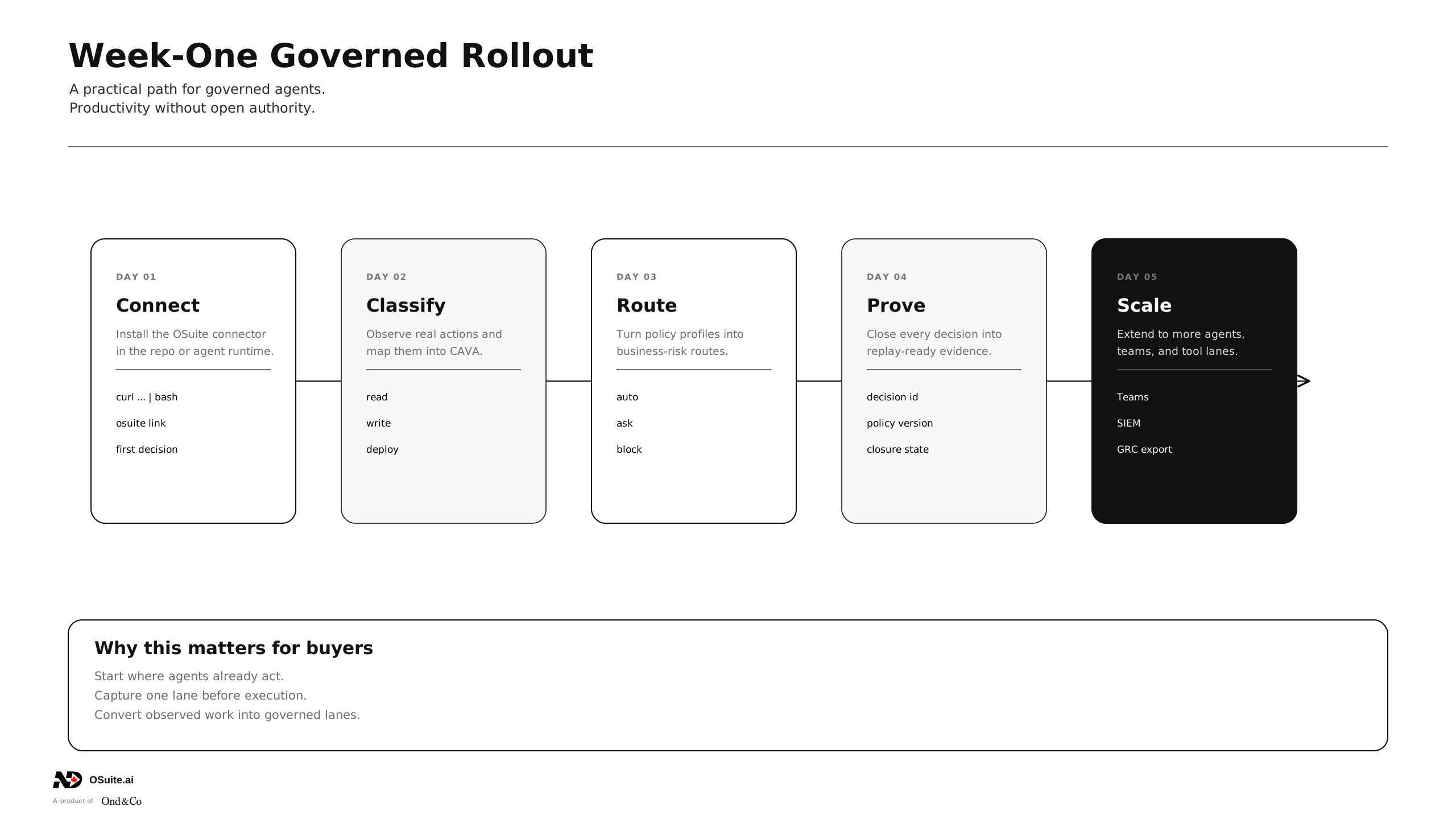
What a governed agent rollout looks like in week one.
The practical path is not to start with a giant AI policy. Start by catching real actions, classifying them, and deciding which ones need authority before execution.
Most enterprise AI rollouts get stuck because the first question is too abstract: "What is our AI governance strategy?"
The better first question is operational: "Which agent actions are we willing to let run without a human, and which ones need authority before execution?"
That is where a governed rollout becomes concrete. You do not need to freeze the company until every policy sentence is perfect. You need to intercept real actions, classify them, and route the decisions that matter.
Week-one governed rollout
Day one: connect where agents already act
The first deployment should sit where the agent already touches work: a repo, shell, MCP server, SDK, workflow runner, or gateway. This is why OSuite starts with connectors rather than asking the customer to rebuild its stack.
The first win is visibility before execution. Not after. Not a weekly report. Before the action runs.
Day two: classify real behavior
Once OSuite sees live agent behavior, CAVA turns raw commands and tool calls into action objects. The team can see whether an action is a read, write, deploy, export, external send, payment, or destructive operation.
This step matters because raw text is often misleading. The same `git push` may be harmless in a docs repo and consequential in a production service. The same API call may be routine in staging and unacceptable against a customer system of record.
Day three: route decisions
The policy profile should be simple at first:
—auto-approve routine reads
—record routine internal drafts
—ask on production, money, customer data, and external communication
—block destructive unknowns
The customer can tighten this over time. The important part is that policy is no longer a PDF. It becomes a runtime route.
Day four: close with evidence
Every meaningful decision needs closure. Approved, rejected, blocked, expired, executed, or failed should not be ambiguous states.
OSuite creates a decision record that explains the action, the score, the authority path, and the proof bundle. That is what buyers can take to security review.
Day five: scale the lanes
Once the first lane works, the organization can expand across agents and teams. The goal is not to make every action slow. The goal is to make safe work fast and consequential work accountable.
That is the shape of a serious AI agent rollout. Not more slogans. A control path.