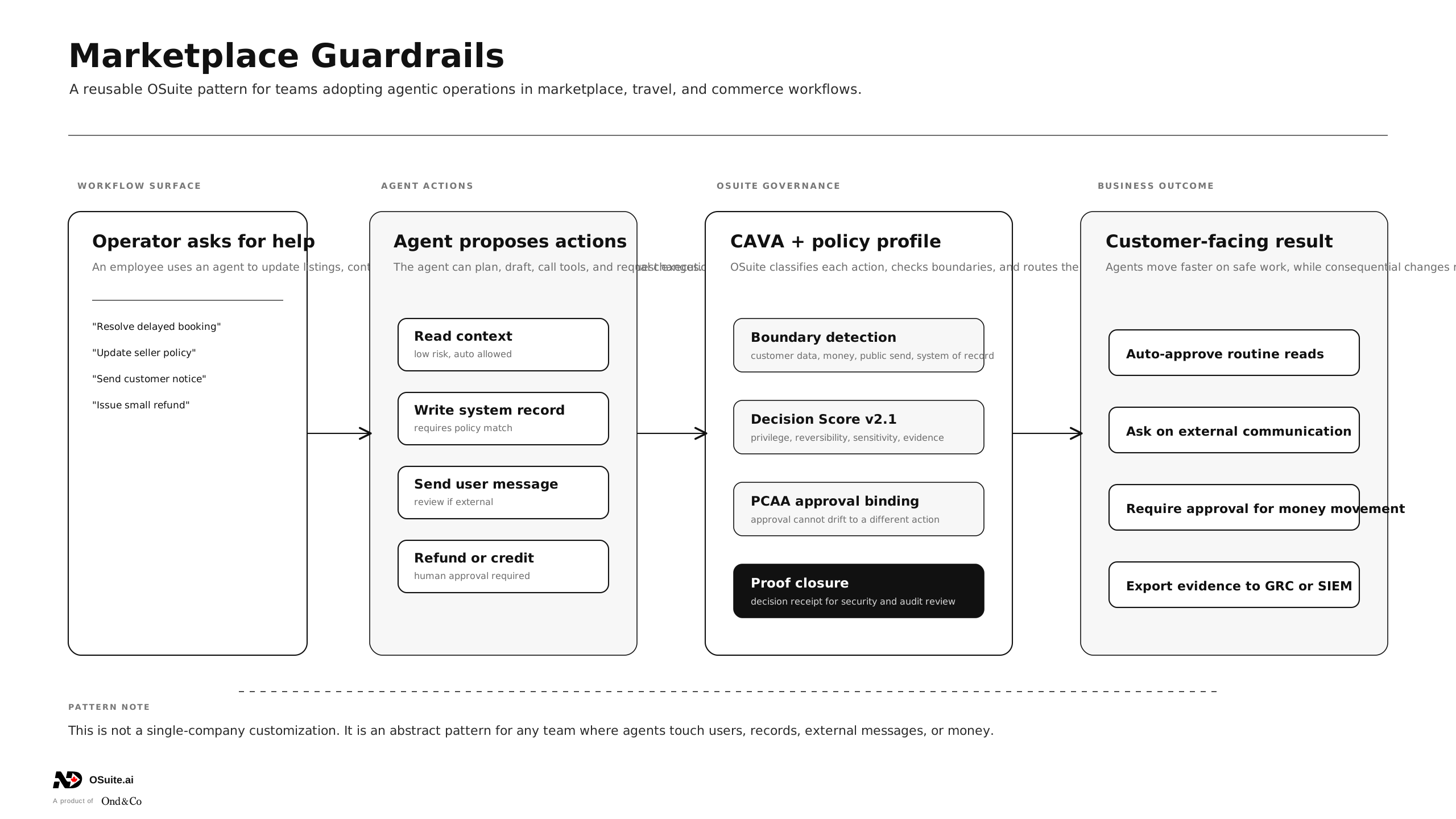
Agents are most useful in marketplace operations when they can draft and investigate freely, but need approval before touching users, money, public messages, or policy.
Marketplaces are a good stress test for AI agent governance because the same workflow can move across very different risk levels.
An agent might read an order, summarize a dispute, draft a seller message, update a listing, recommend a refund, or change a policy flag. Those actions all sit next to each other in the operator's day, but they should not share the same authority path.
Marketplace guardrails pattern
The useful split
The first split is between assistance and authority.
Agents should be allowed to help with investigation, summarization, drafting, and internal recommendations. That is where they create speed without needing final control.
But the moment an action affects a customer, seller, partner, payment, public message, or policy state, the organization needs a decision record.
The pattern
For marketplace teams, the OSuite pattern usually looks like this:
—read and summarize can be fast
—draft and prepare can be low-friction
—external messages need review when customer-facing
—refunds and credits need approval
—policy and account-state changes need named authority
—all high-risk actions need proof closure
Why this scales
This is not a one-off customization. The same structure applies to travel operations, support operations, fintech risk, regulated service desks, and commerce workflows.
The labels differ. The control problem is the same. Agents can propose. The deployer decides. OSuite proves the decision path.