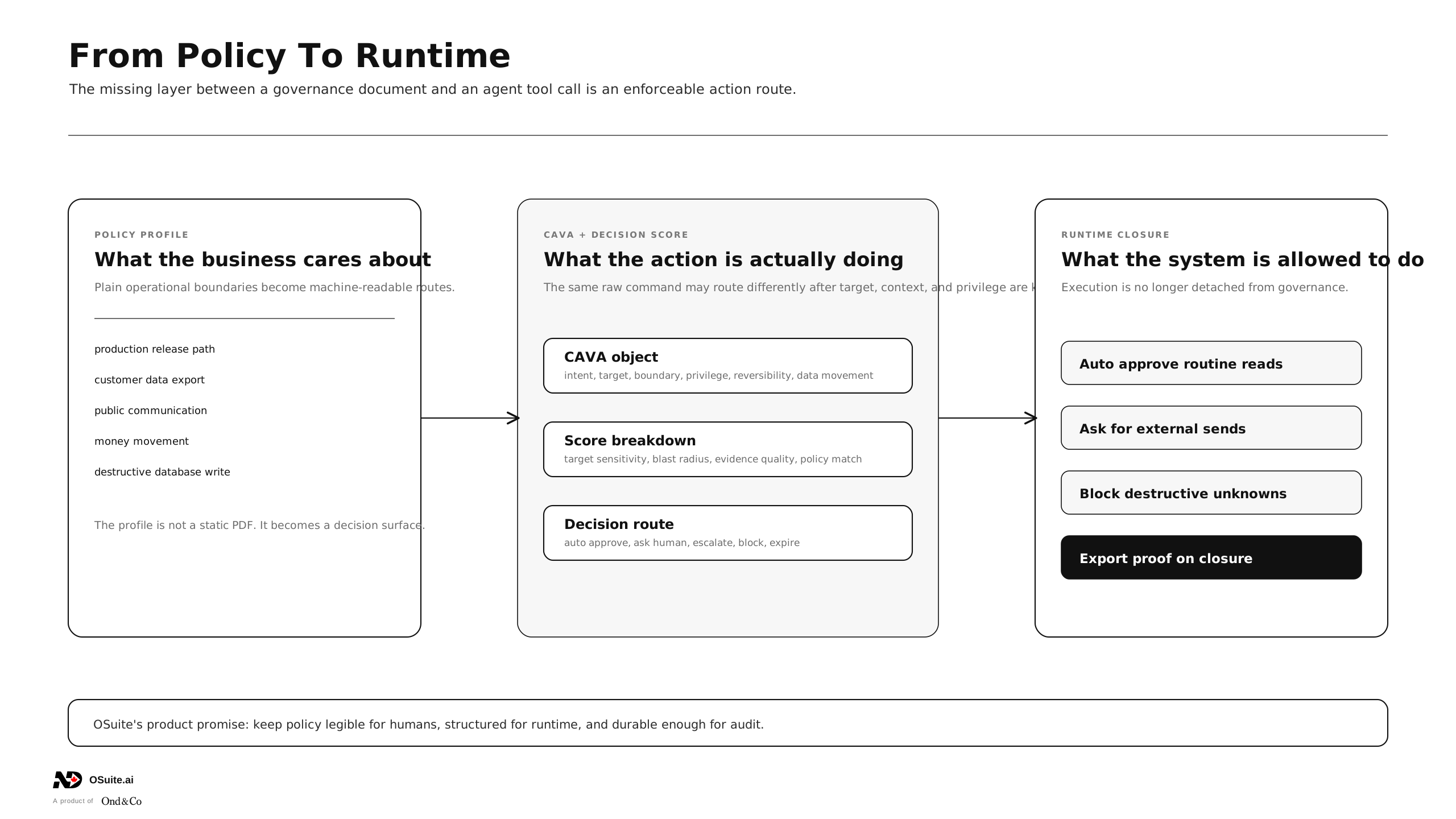
Most AI governance documents are written for humans, then abandoned by runtime systems.
They say sensible things: protect customer data, control production changes, review external communication, preserve audit evidence. But the agent runtime does not understand a governance paragraph. It understands a tool call.
The missing product layer is translation.
Policy to runtime closure
What OSuite translates
OSuite translates a policy profile into decision routes. The customer can define the boundaries it cares about, and CAVA evaluates whether a live action touches one of those boundaries.
The result is not a generic risk label. It is a route:
—auto-approve
—ask a named operator
—escalate to a higher authority
—block the action
—expire the approval if the action changes
—close the event with evidence
Why this makes policy useful
A static policy can tell employees what should happen. A runtime policy can make sure the agent cannot quietly do something else.
This matters most in mixed environments. A company may use coding agents, MCP servers, internal workflows, vendor tools, and custom SDKs at the same time. If every lane has a separate governance story, the buyer still has a governance problem.
OSuite gives those lanes one decision model.
The bar for serious deployment
If policy does not affect runtime behavior, it is an opinion. If policy affects runtime behavior but leaves no proof, it is hard to defend. The mature version does both: route the action before execution and preserve the evidence after closure.