Keeping AI-assisted itinerary and partner operations inside human boundaries.
A composite field pattern for travel teams using agents to draft itinerary changes, partner updates, and customer responses while reserving final authority for operators.
T
Travel operations group
Travel · Partner operations
3
operator approval lanes
<5 min
target review window
100%
external sends recorded
Travel operations are full of small decisions that look harmless in isolation. A delayed booking, an itinerary note, a partner update, a customer message, or a compensation suggestion can all move quickly through an agent workflow.
The governance issue is that these actions have different meanings. Reading an itinerary is not the same as changing one. Drafting a customer message is not the same as sending it. Suggesting compensation is not the same as issuing credit.
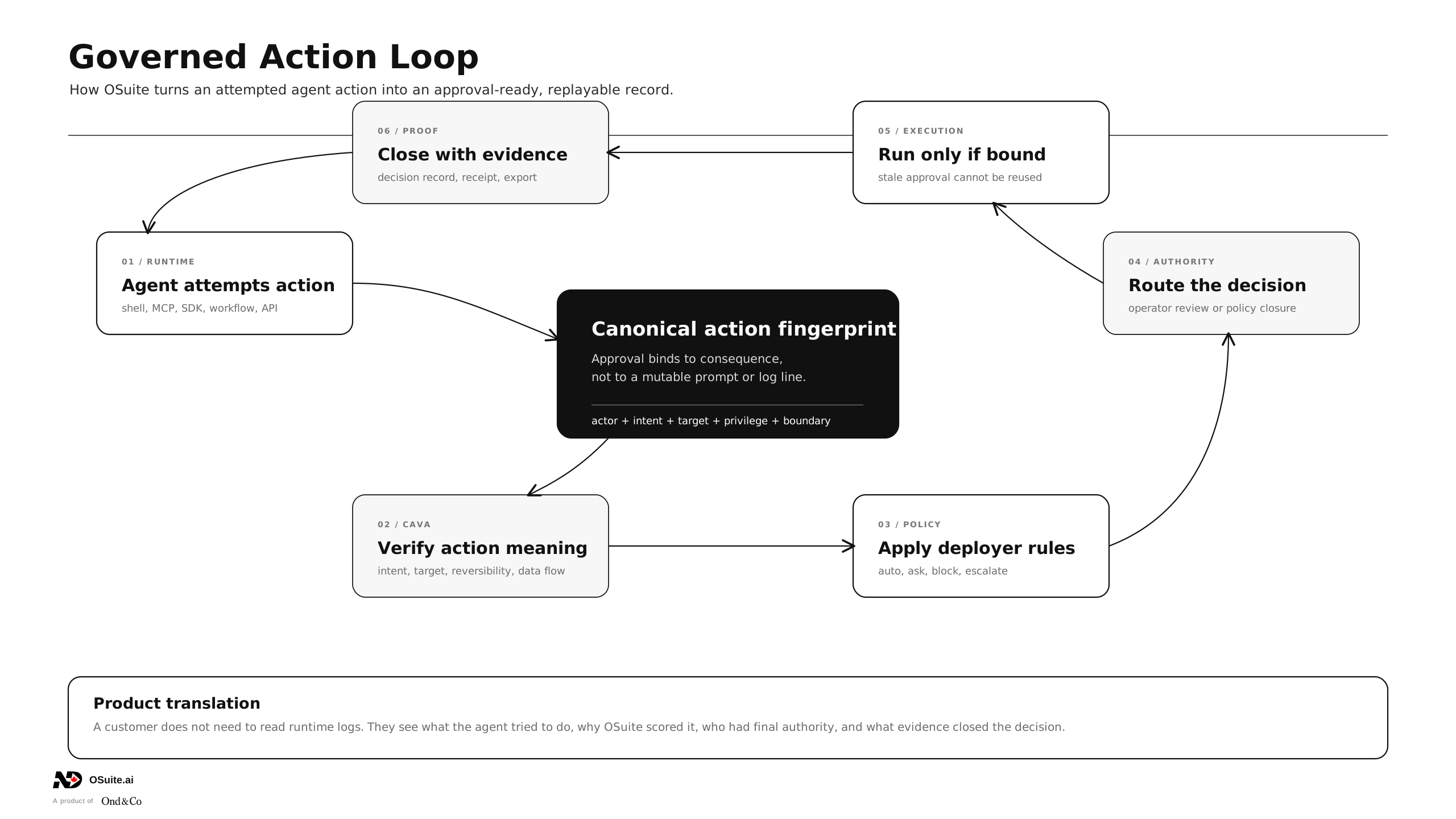
Governed action loop
The OSuite pattern
OSuite separates drafting from execution. Agents can prepare work, gather context, and propose next steps. When the workflow touches a customer-visible change, partner-facing communication, or financial adjustment, the action is converted into a canonical object and routed to a named operator.
For the customer, the language becomes much easier to understand:
—This action only reads internal context.
—This action changes a customer itinerary.
—This action sends a message outside the company.
—This action creates financial or contractual exposure.
What changes for the business
The team does not need to ban agents from operational work. It can allow agents to help while preserving a clean separation between recommendation and authority.
That separation is what makes the deployment credible in front of business leaders. OSuite gives the operator a clear decision, the agent a safe path to useful work, and the company a receipt when the decision closes.
“We wanted the agent to reduce manual work, not quietly become the person who changes the customer experience.”
Digital Operations Director · Composite travel team